A practical technology stack for automating and operating vacation rentals, based on approximately ten years of firsthand experience.
Operating a successful vacation rental involves much more than accepting reservations and arranging cleanings. Every stay creates a chain of responsibilities: attracting travelers, maintaining listings, synchronizing calendars, setting rates, communicating with guests, sharing property information, coordinating operations, and identifying opportunities for improvement.
Trying to manage all of that manually becomes increasingly difficult as a portfolio grows. Over time, I have assembled a collection of platforms that work together as a layered operating system. These tools do not eliminate hands-on hospitality, but they reduce repetitive work, organize information, and help us provide a more consistent guest experience.
This article is not a list assembled from product descriptions. It is based on platforms I currently use or have personally used during approximately ten years of operating short-term rentals.
My Vacation-Rental Technology Stack
- Airbnb, Vrbo, and Booking.com: Booking and distribution
- Hospitable: Central property-management system
- PriceLabs, Outlier, and Revenue IQ by IntelliHost: Pricing and performance optimization
- BetterSTR: Digital guest information and companion guidebooks
- The Host Co.: Upsells and guest experiences
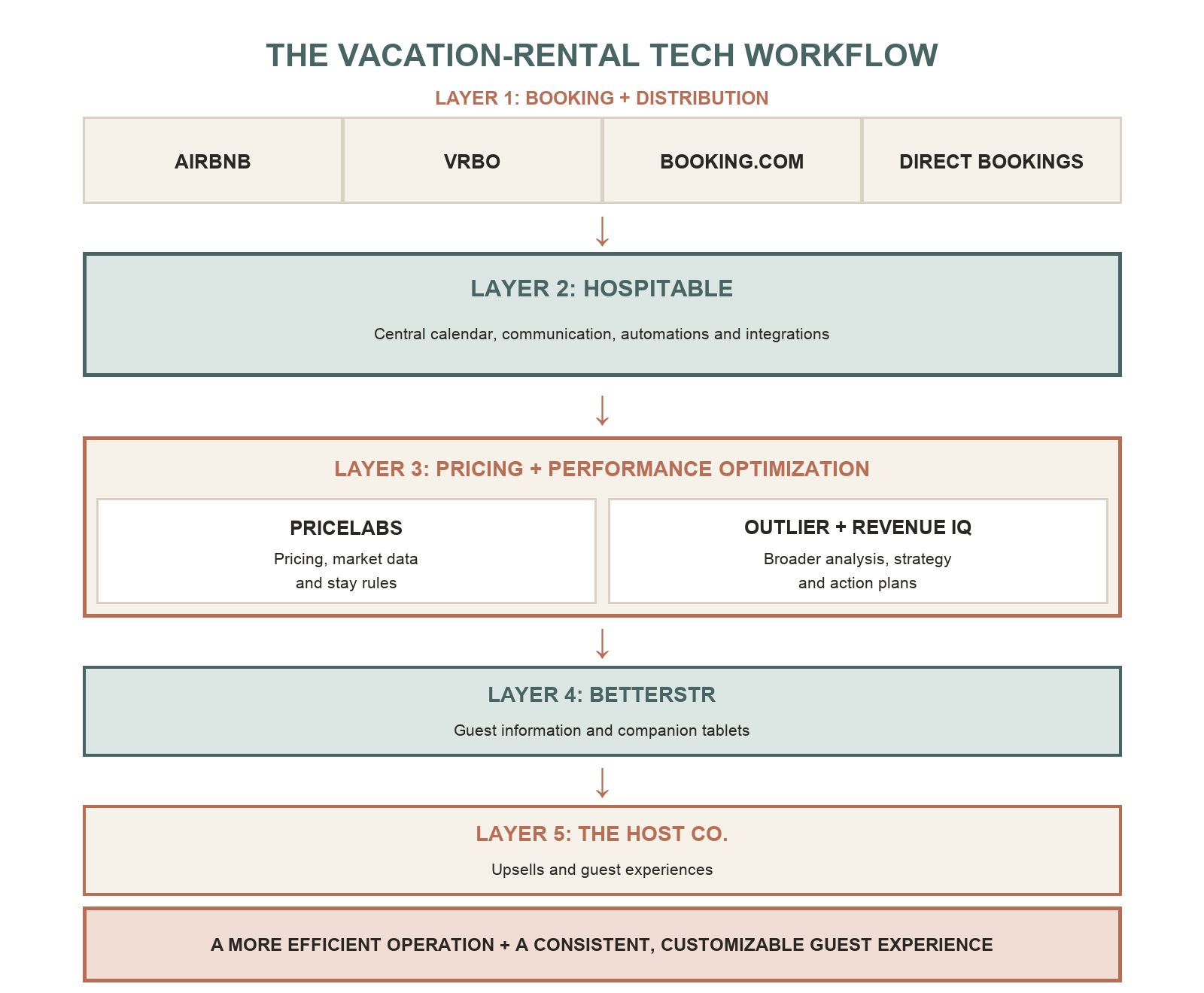
Each platform serves a different purpose. The real advantage comes from how the five layers work together.
Layer One: Airbnb, Vrbo, and Booking.com
The first layer consists of the marketplaces where travelers discover and reserve vacation rentals. I have used all three major platforms during the past ten years. Although they perform similar functions, my experience with each has been noticeably different.
Vrbo: Where We Started
We began our short-term-rental business with Vrbo. At the time, Airbnb felt considerably more informal, while Vrbo appeared more established for renting an entire vacation home. The initial setup was relatively seamless and we experienced decent success.
Looking back, I would rank Vrbo second to Airbnb in overall user-friendliness. Its greatest advantage has been the type of reservation it tends to generate. Our Vrbo guests have generally been higher-quality groups who appear more willing to pay a premium and have often treated the properties more respectfully. The tradeoff is volume: Vrbo has not generated nearly as many reservations for us as Airbnb.
Best for: Hosts with entire-home rentals who prioritize reservation quality and potentially stronger rates over maximum booking volume.
Airbnb: The Volume Leader
We added Airbnb approximately one or two years after beginning with Vrbo. Since then, Airbnb has become the dominant source of our reservations. Approximately 85% of our bookings have come through Airbnb.
It has generated more visitors, listing traffic, and reservations than the other channels we have used. It is also the most user-friendly and appears to be the most widely used vacation-rental platform in the United States.
The experience has not been perfect. Our Airbnb guest quality has been less consistent than on Vrbo, and we have encountered situations in which it felt as though Airbnb accepted a guest’s account over the host’s. Airbnb has also shifted more of the fee burden to hosts. Even with those frustrations, it has undoubtedly been the king of our booking channels.
Best for: Hosts seeking volume, visibility, ease of use, and access to a large domestic audience.
Booking.com: Strong Demand, Difficult Learning Curve
Booking.com was our least favorite of the three. Its setup was not user-friendly, but once the property was listed, reservations arrived quickly and appeared to expose us to a more international audience.
We later realized our rates were considerably below market. I cannot say with certainty whether that reflected the platform or our unfamiliarity with its settings. We also did not initially understand that its commission was invoiced separately. The combination of underpriced reservations, separate invoices, and a difficult interface caused us to remove the listing.
Best for: Hosts seeking international exposure and added booking volume who are willing to learn its pricing, payment, fee, and configuration systems carefully.
Layer Two: Hospitable as the Mothership
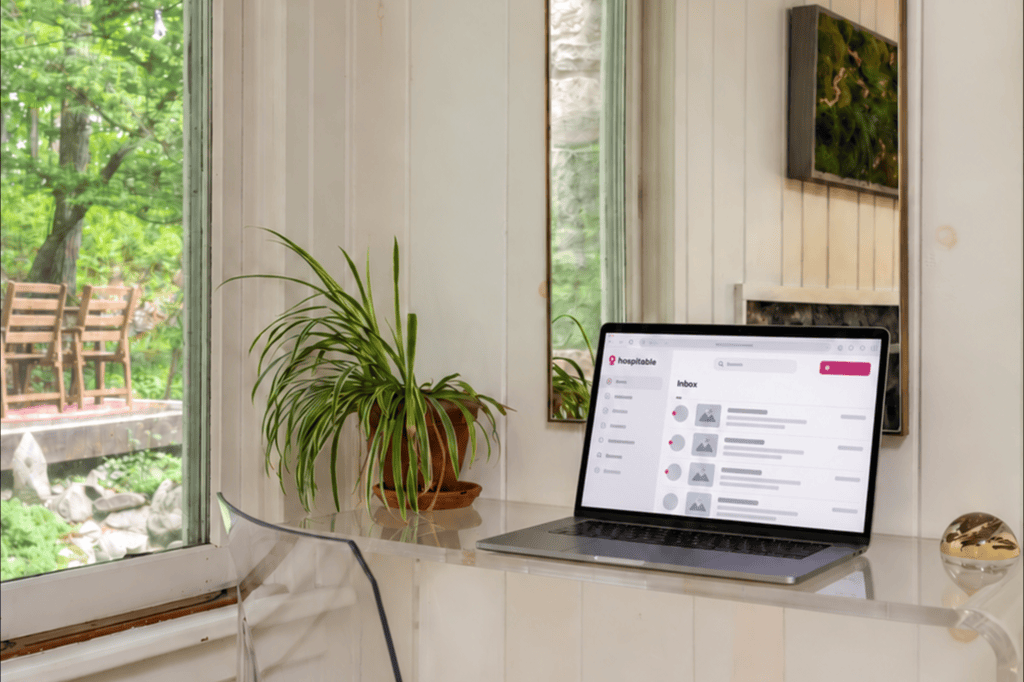
Airbnb, Vrbo, and Booking.com generate reservations. Hospitable brings the work surrounding them into one central operating system. If I had to identify the platform at the center of our business, it would be Hospitable—the mothership.
It is the only property-management system we have personally used, so I cannot compare it fairly with every alternative. I can say that it has worked extremely well for our operation.
Centralization and Automation
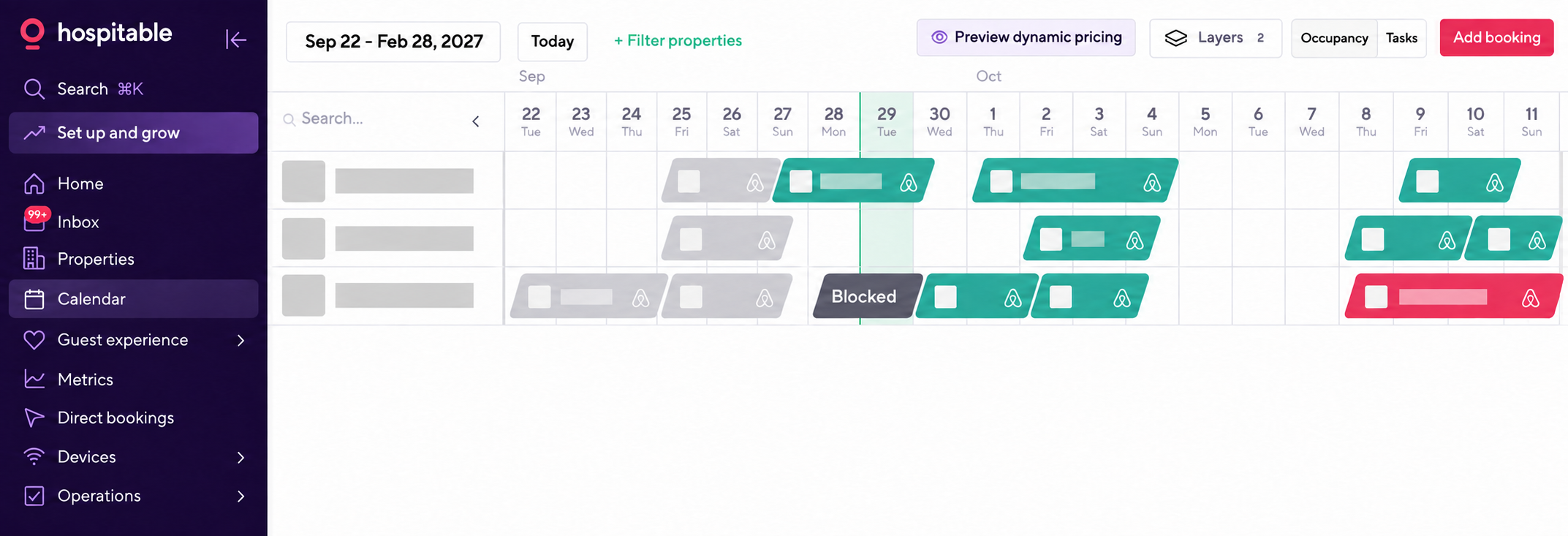
Hospitable centralizes calendars, reservation information, and guest communication from connected channels. Instead of monitoring several independent inboxes and calendars, we can oversee activity from one location. It also gives us the ability to create a direct-booking website and link.
Its messaging automation completely changed the way we operate. Scheduled messages can deliver confirmations, pre-arrival guidance, check-in information, mid-stay communication, checkout instructions, and post-stay follow-up. This handles predictable information while leaving us more time for situations requiring personal attention.
Smart Technology and Integrations
We use Hospitable with smart locks and thermostats. It is also the system from which services such as Outlier and Revenue IQ by IntelliHost can retrieve property and performance information. PriceLabs, BetterSTR, and The Host Co. can work with Hospitable as well, reinforcing its role as the central hub.
- What I like: User-friendly operation, excellent customer service, centralized communications, efficient automations, direct bookings, smart-device connections, useful reporting, and ongoing innovation.
- What requires attention: Setup and testing matter. An automation error can be repeated across many reservations, and the combined cost grows as additional tools are added.
- Best for: Hosts seeking to centralize short-term-rental activity and automate guest messaging, particularly across multiple properties or booking channels.
Layer Three: Pricing and Performance Optimization
This layer combines tools that address closely related parts of the same job. PriceLabs supplies dynamic pricing, stay rules, and market data. Outlier or Revenue IQ builds on that foundation by examining the listing more broadly and helping translate performance information into strategic action.
PriceLabs: The Pricing and Market-Data Foundation
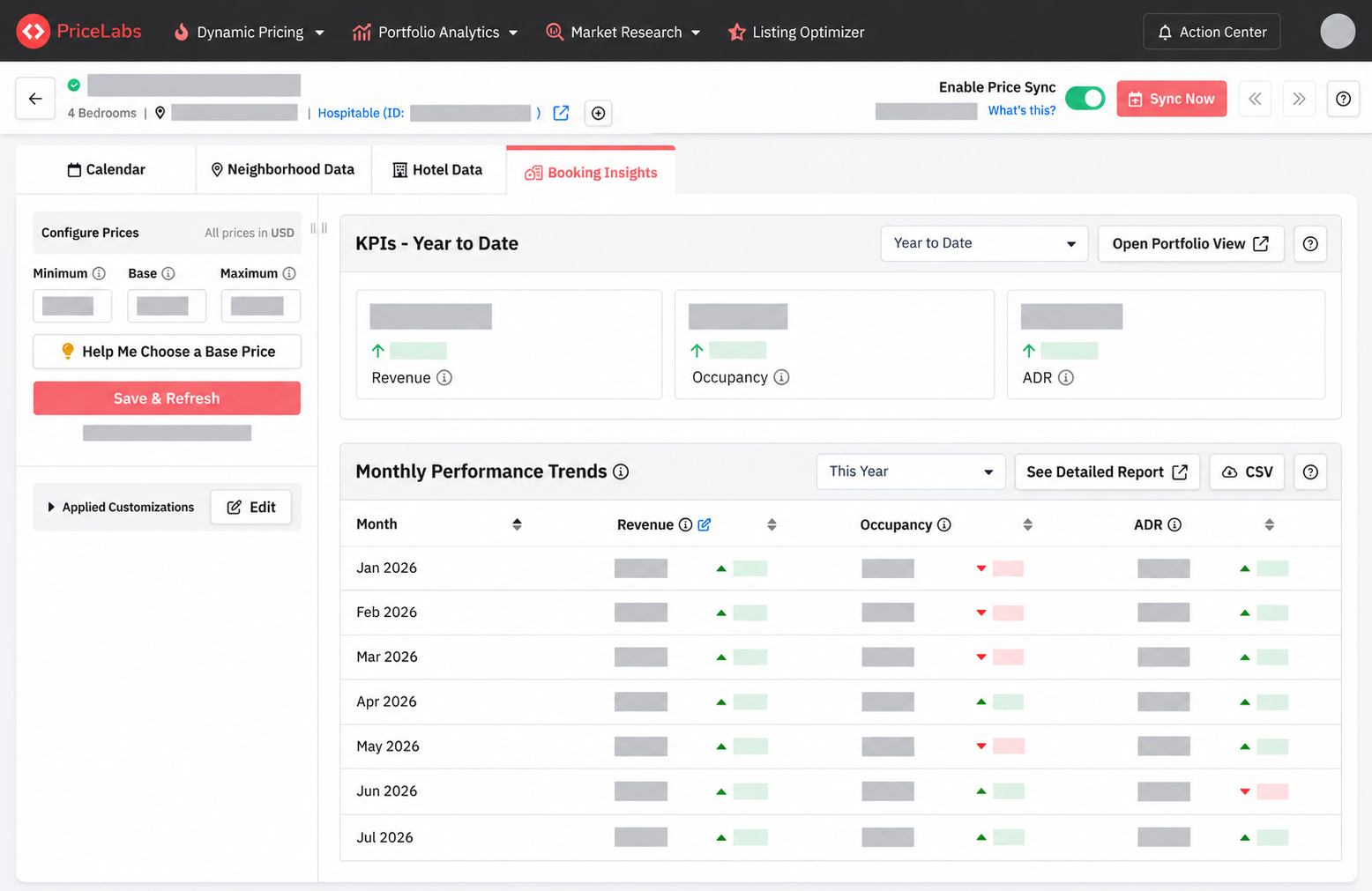
PriceLabs serves as the dynamic-pricing and market-data foundation for this layer. Rates may need to respond to weekdays, weekends, seasons, holidays, events, booking windows, last-minute vacancies, gaps, and minimum-stay requirements.
PriceLabs connects with Hospitable to distribute rates and stay restrictions to the booking channels. Its pricing and market information also helps inform the work performed by Outlier and Revenue IQ.
I have never used PriceLabs without Outlier or Revenue IQ, so I cannot fairly isolate its independent effect. In my operation, the three tools work hand in hand: PriceLabs provides a data-rich pricing foundation, while Outlier or Revenue IQ takes the information further through broader listing analysis, strategic recommendations, and performance support.
- What I like: Automated rate adjustments, seasonal and event responsiveness, minimum-stay controls, and reduced manual calendar work.
- What requires attention: Settings can be intimidating. Minimums, maximums, and rules must be supervised because a poorly configured tool can automate the wrong strategy.
- Best for: Hosts in seasonal or event-driven markets, multi-property operators, and anyone wanting to avoid pricing every date manually.
Outlier and Revenue IQ: Turning Data Into Strategy
Pricing is only one part of performance. A listing may also be affected by limited search visibility, weak photographs, an uncompetitive amenity set, poor click-through, or views that fail to convert. This is where Outlier and Revenue IQ take the PriceLabs foundation a step further.
Outlier: My Preferred Performance Partner
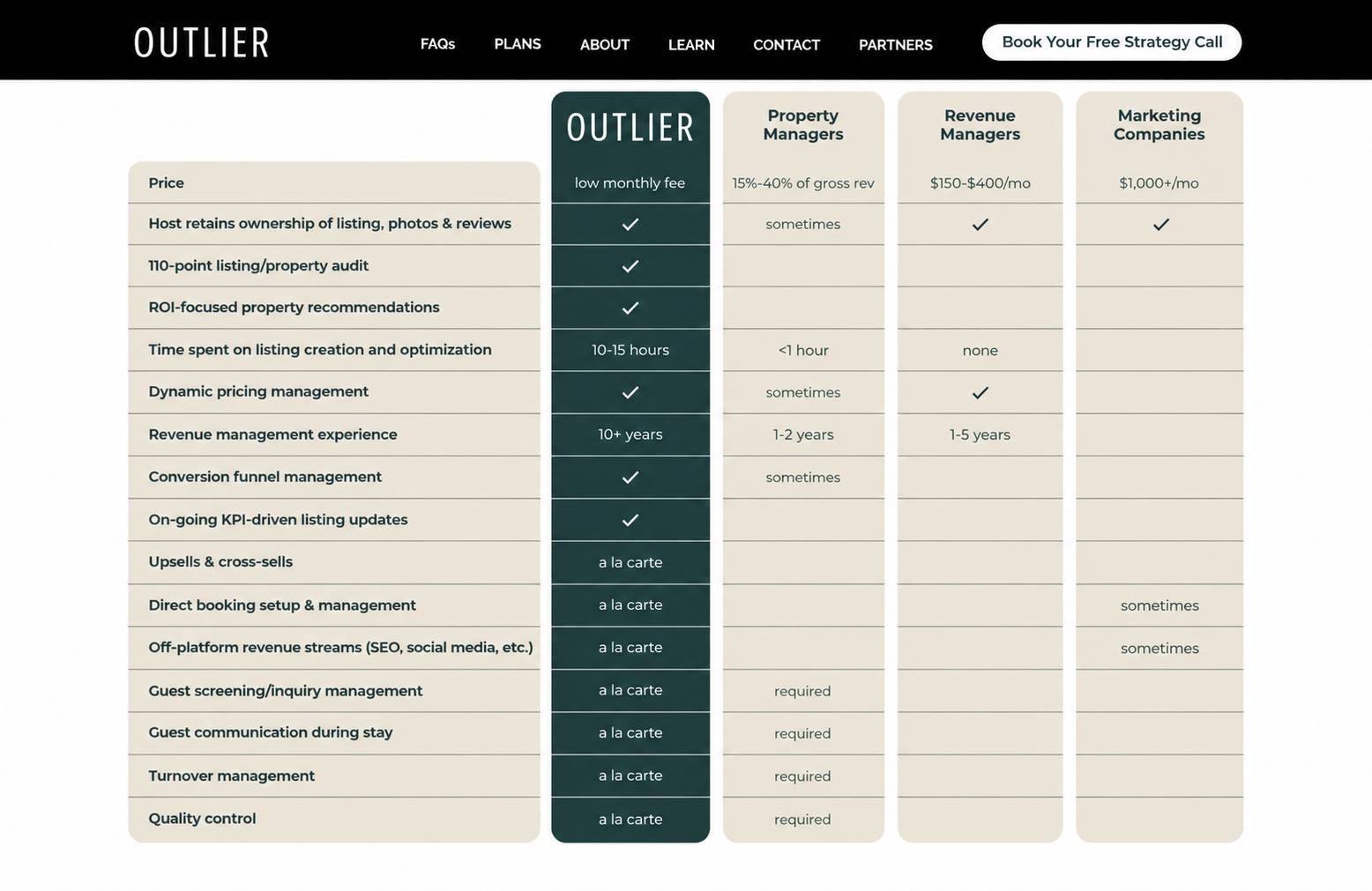
Outlier is my preferred option. It costs more than Revenue IQ in my experience—approximately $300 per month for our Outlier service compared with roughly $100 for Revenue IQ—but it has provided more continuity, collaboration, and hands-on guidance. Outlier customizes its month-to-month pricing based on the property, selected services, and operator goals.
The Outlier team reaches out monthly to discuss changes and progress. It prepares return-on-investment reports, reviews comparable properties, and helps determine what may increase reservations and average daily rate.
Some of the most useful recommendations were surprisingly straightforward. At one rental, Outlier recommended adding another bed to increase sleeping capacity. At another, the team recommended adding a firepit and creating more intentional outdoor gathering spaces. These were not complete renovations, but they helped make the rentals more competitive and produced a noticeable impact.
Outlier also recommended making one property more attractive to families with young children. We created a dedicated entertainment area with a television, games, books, and room for children to play. It was another practical change designed around the guests we wanted the property to serve.
- What I like: Continuity of service, proactive communication, accountability, ROI reports, competitor reviews, and clear action plans covering pricing, photography, amenities, renovations, and presentation.
- What requires attention: It is the more expensive option, and recommendations may require additional investment. No consultant can guarantee a return.
- Best for: Hosts who want strategic guidance, especially for an underperforming property or before making improvement and renovation decisions.
Revenue IQ by IntelliHost: Useful Data With Less Handholding
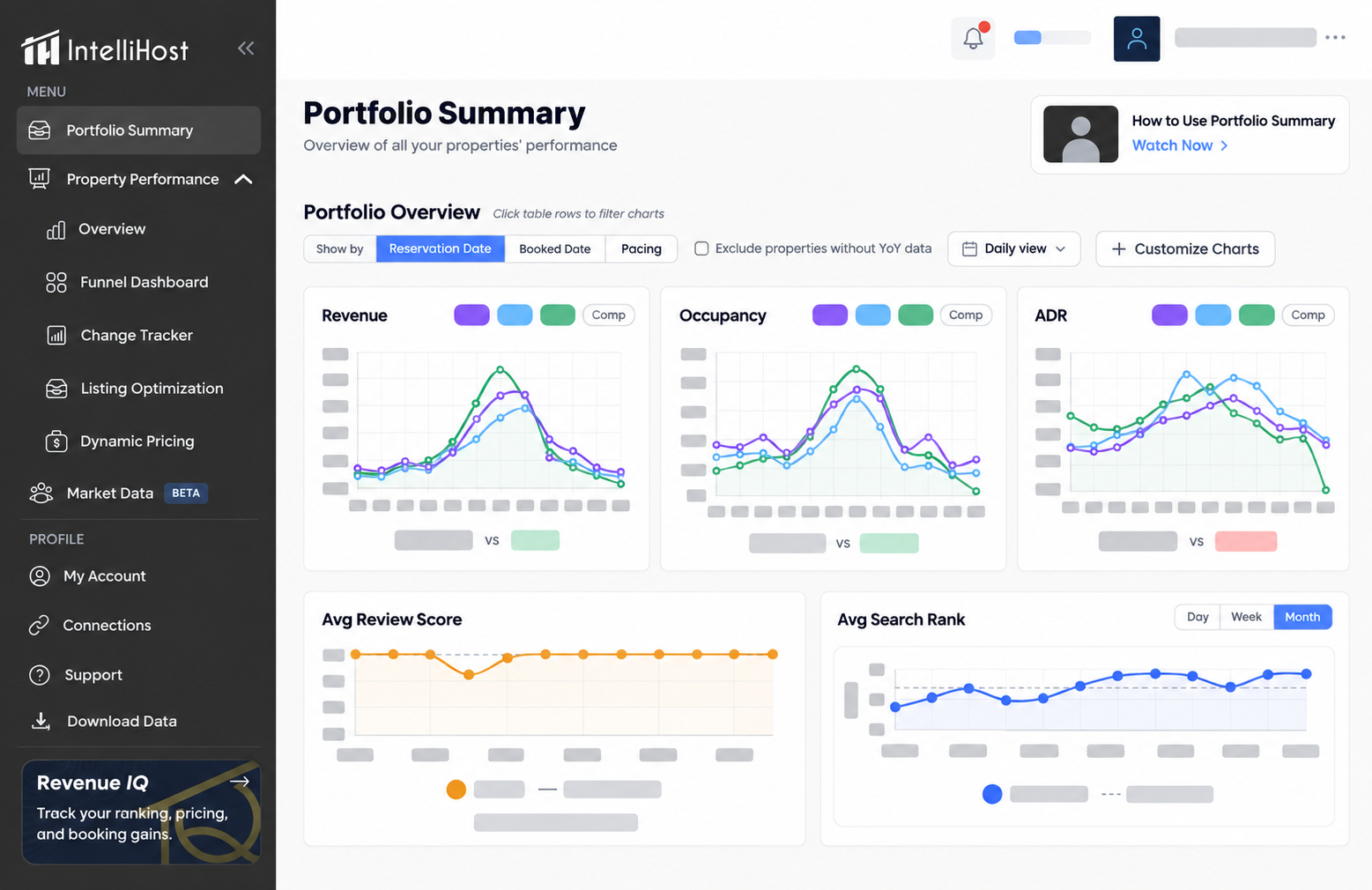
Revenue IQ is a premium feature within the IntelliHost network. It analyzes visibility, click-through, conversion, revenue, occupancy, average daily rate, review performance, and search rank. It can help identify where the booking funnel is breaking down, but my results have been more modest and communication less proactive.
My best analogy is that Revenue IQ feels like a step above PriceLabs. Both Outlier and Revenue IQ use analytical software, but Outlier helps translate the findings into action. Revenue IQ provides information that the host is more responsible for retrieving, interpreting, and implementing.
Best for: Budget-conscious, analytical, and self-directed hosts who are comfortable interpreting performance data without extensive guidance.
Layer Four: BetterSTR for Guest Information
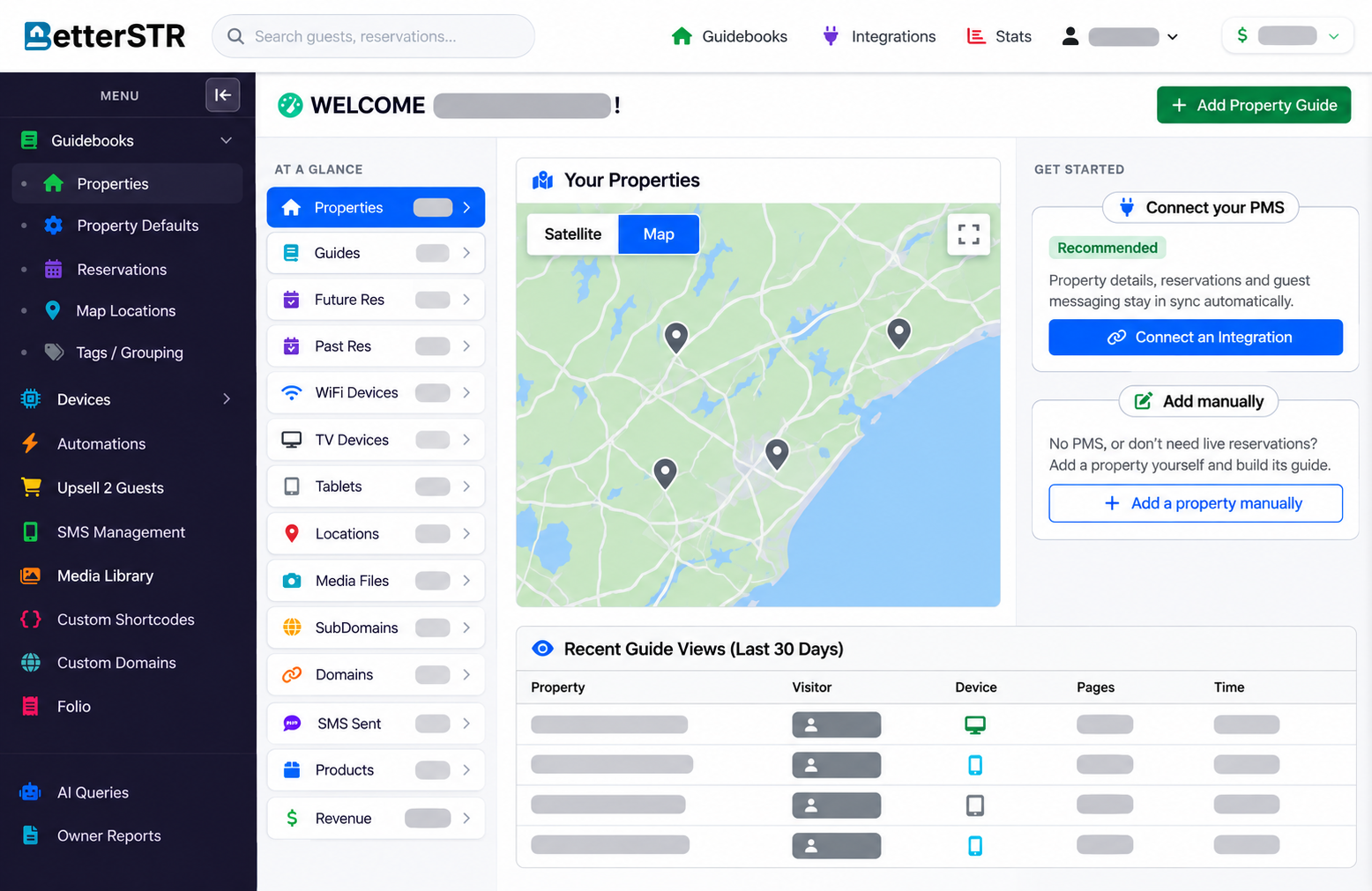
BetterSTR is where much of our organization becomes visible to guests. It modernized our traditional welcome packets and organizes check-in, departure, house guidelines, Wi-Fi, operating instructions, supplies, safety information, weather, restaurants, groceries, activities, maps, emergency contacts, and returning-guest information.
Guests receive access to the digital guide before arrival. We also keep a companion tablet at each property with the guide loaded. I maintain a laminated physical binder as well because guests have different preferences, much like choosing between a Kindle, printed book, or PDF.
- What I like: Modern presentation, companion tablets, organized categories, affordable pricing, customization, excellent customer service, and fewer repetitive questions.
- What requires attention: The interface can feel overwhelming, content development takes time, and the digital, tablet, and physical versions must be updated. Tablets also require charging, cleaning, updates, and troubleshooting.
- Best for: Hosts with detailed properties, repeated guest questions, extensive local recommendations, or multiple homes requiring consistent information.
Layer Five: The Host Co. for Upsells and Guest Experiences
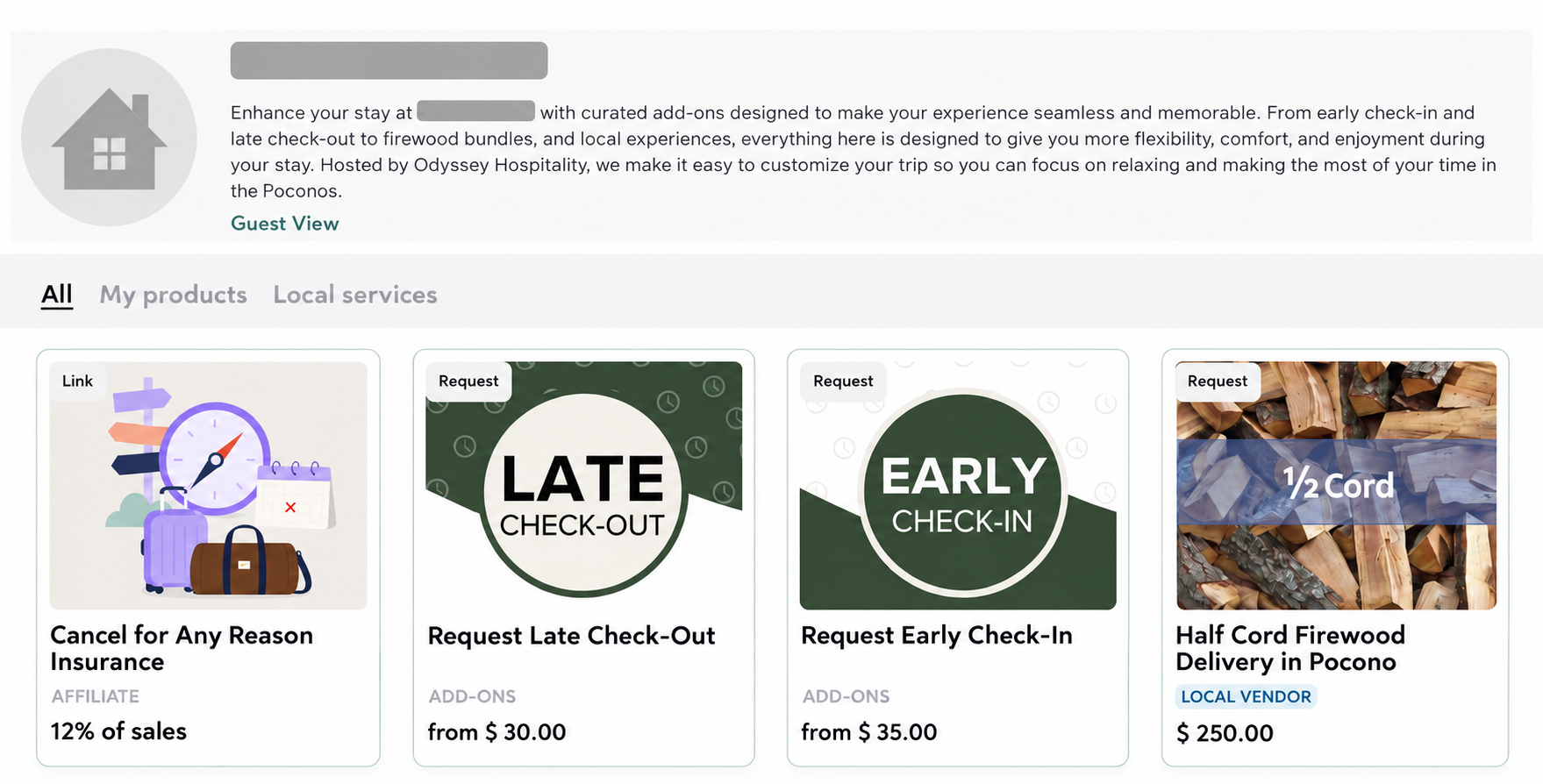
The Host Co. is the icing on the cake. It creates a digital storefront for each property where guests can purchase optional services, products, experiences, and conveniences.
Early check-in is one of our most frequent requests. The Host Co. allows us to monetize it through an attractive storefront without making the interaction feel overly sales-focused. The same system can support late checkout, private chefs, local activities, firewood, travel insurance, children’s packages, wellness options, and other reliable offers.
Real Results From Our Storefronts
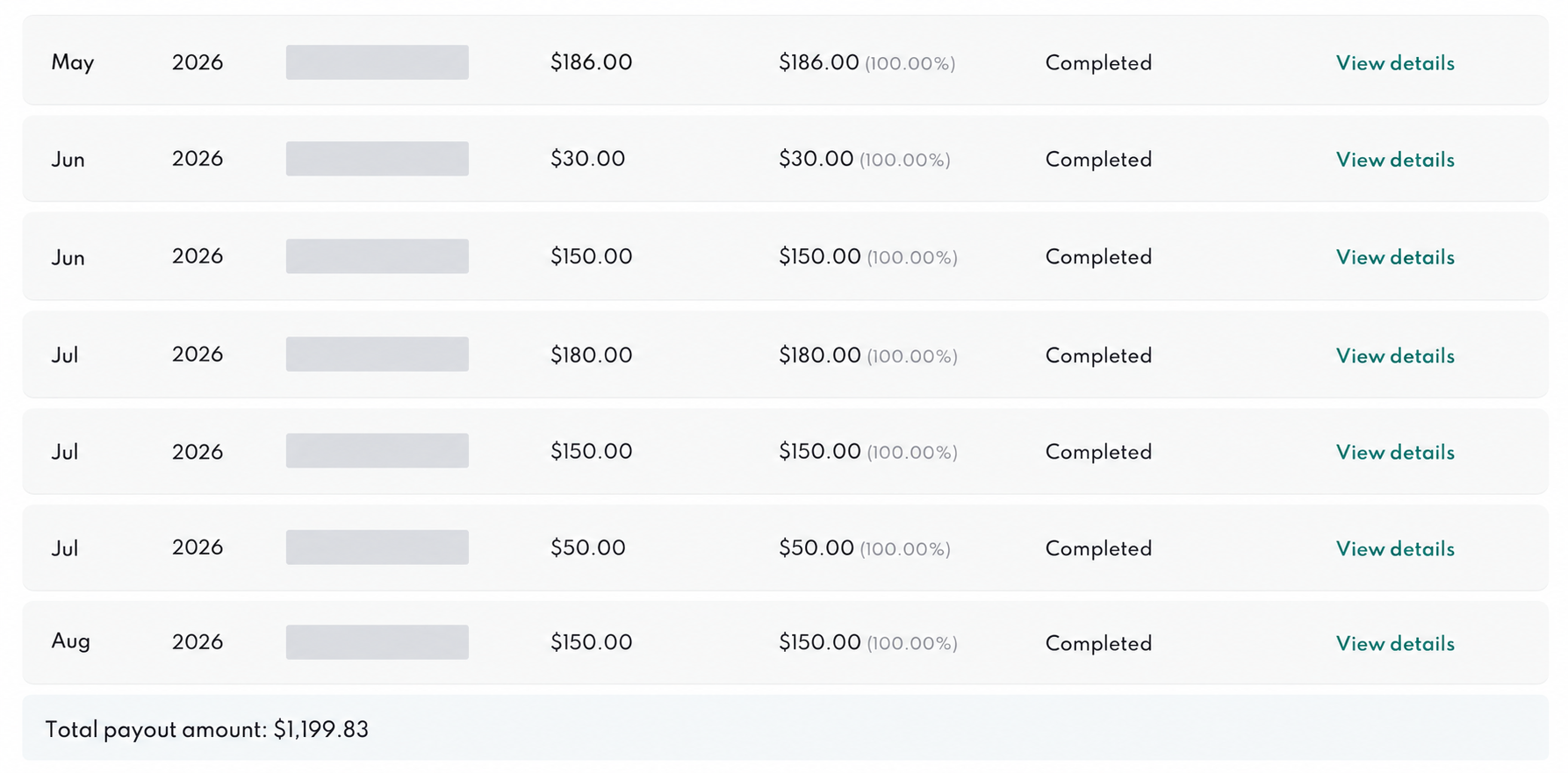
At the time of writing, our account shows $1,199.83 in total payouts across our properties. This is gross payout rather than net profit, but it demonstrates that the storefront is generating real revenue. The Host Co. has been one of our best investments because its annual cost is relatively low, it has already generated more than it costs us, and it requires little ongoing work after setup.
Creating Property-Specific Offers
I am developing an optional spa and wellness kit featuring Normatec and Hyperice recovery devices. Before offering it, we need operating instructions, sanitation procedures, secure storage, inventory checks, manufacturer guidance, appropriate pricing, and a plan for damaged or missing components. It should be described as a wellness and recovery amenity, not medical treatment or a guaranteed health outcome.
Not every offer needs to be elaborate. Firewood can prevent an inconvenient trip. Children’s books or toys can help families pack less. A snack basket, birthday setup, or rainy-day kit can create convenience with limited complexity. Repeated guest requests are often the best source of ideas.
- What I like: Professional storefronts, repeatable paid offers, property-specific products, local providers, minimal ongoing work, and measurable added revenue.
- What requires attention: Software cannot fulfill the service. Hosts must manage availability, notice, labor, cancellation rules, taxes, insurance, permits, and profitability. Too many offers can also make the stay feel transactional.
- Best for: Operators who receive frequent requests for schedule flexibility, supplies, services, or experiences and can fulfill them reliably.
How the Entire System Works Together
A traveler discovers and reserves a property through a marketplace or direct-booking channel. The reservation enters Hospitable, which coordinates the calendar, communication, and related workflows. PriceLabs supplies dynamic pricing and market data; Outlier or Revenue IQ extends that foundation into broader listing-performance analysis and strategy. BetterSTR gives the guest an organized source of property information, while The Host Co. offers optional ways to personalize the stay.
Discovery → centralization → pricing and performance optimization → guest information → optional experiences.
The platforms are not competing to perform the same job. Each occupies a different position in the system.
Automation Does Not Replace Hospitality
No technology stack completely automates a vacation-rental business. Properties still need to be cleaned, inspected, maintained, supplied, and improved. Guests still encounter unusual situations. Local knowledge, sound judgment, and responsive human support remain essential.
The purpose of automation is not to remove the host from hospitality. It is to handle repetitive and predictable work so the host has more time and attention for situations that genuinely require it.
The best system is not necessarily the one with the most subscriptions. It is the one in which every tool has a clear role, exchanges information reliably, and earns its place.
Disclosure
This article is based entirely on my firsthand experience operating three vacation rentals. I am not sponsored by, affiliated with, or being compensated by Airbnb, Vrbo, Booking.com, Hospitable, Outlier, IntelliHost or Revenue IQ, PriceLabs, BetterSTR, or The Host Co.
Any prices mentioned reflect my personal experience and may change based on the provider, selected services, number of properties, and date of enrollment. The $1,199.83 Host Co. figure represents gross payouts shown in my account at the time of writing—not guaranteed earnings or net profit. Individual results will vary.


Leave a comment